
01
What is hospital activation?
Hospital activation is the coordinated preparation of a new or redeveloped healthcare facility for operation. It connects the delivery of the building with the practical requirements of running services within it.
A new hospital needs people, equipment, digital systems and support services working together before it can receive patients. Activation brings these preparations into one coordinated programme.
The terminology varies between organisations and countries. Projects may describe overlapping activities as operational commissioning, operational readiness, activation or transition planning. Agreeing what each term covers — and who is responsible — is an early planning task.
The Australasian Health Facility Guidelines, Part F: Project Implementation provide a useful starting point, with separate guidance on operational commissioning and on furniture, fittings and equipment.
02
How do commissioning, readiness and relocation fit together?
It helps to separate four connected areas of work, each with its own central question.
| Area | Central question |
|---|---|
| Technical commissioning | Have the building’s engineering systems been tested and verified against their requirements? |
| Operational readiness | Can the people, processes, equipment and systems support the intended services? |
| Activation | How will the facility be equipped, prepared and brought into use? |
| Transition and relocation | How will services, patients and equipment transfer while care continues? |
These are working distinctions rather than universal definitions. Each project should document its own scope and interfaces.
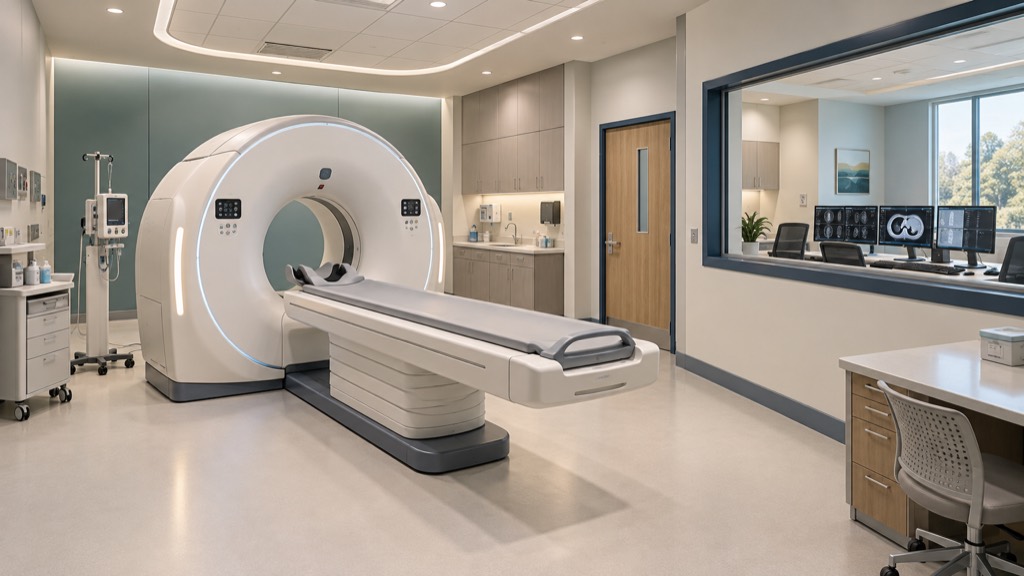
For engineering requirements in England, the NHS Health Technical Memoranda cover subjects including ventilation, water, medical gases, electrical services and fire safety. They are England-specific; see applying guidance across the UK.
03
What should an opening plan address?
The questions below are prompts for project discussions. They are a starting point, not a complete readiness assessment, and they are not a safety assessment or certification tool.
- Leadership and decisions
- Who owns the opening programme? Who can resolve competing priorities, and what evidence will support the decision to open?
- Clinical services and workflows
- Have teams worked through how patients, information, medicines and specimens will move through the facility?
- People and preparation
- Are staffing arrangements agreed? Can staff attend orientation, equipment training and rehearsals while existing services continue?
- Equipment and supplies
- Are delivery, installation, acceptance, maintenance and replenishment arrangements coordinated?
- Digital systems
- Have teams tested the full operational journey, including system interfaces, user access and downtime arrangements?
- Facilities and support services
- Are cleaning, catering, security, portering, waste, linen and maintenance ready for the planned activity?
- Transition and early operations
- How will the move be sequenced, problems escalated and services supported after opening?

Recording the discussion
A useful format is to record an owner, the evidence required, dependencies and the next decision against each question. For example:
| Question | Owner | Evidence required | Dependencies | Next decision |
|---|---|---|---|---|
| Digital systems: downtime arrangements tested? | To be agreed | To be agreed | To be agreed | To be agreed |
| Equipment: acceptance process agreed? | To be agreed | To be agreed | To be agreed | To be agreed |
Published example
The Midland Metropolitan University Hospital programme annexes PDF, 2.6 MB, published by Sandwell and West Birmingham Hospitals NHS Trust, show how one NHS programme documented readiness, activation, move planning and opening criteria. They are a project-specific example rather than a template to adopt unchanged.
04
Test how the hospital will work
Walkthroughs and simulations can reveal problems that are difficult to see in drawings or in separate departmental plans.
Consider testing a complete journey: arrival, assessment, investigation, treatment and transfer. Include the support activities that make that journey possible, such as finding equipment, accessing records and communicating between teams.
The US Agency for Healthcare Research and Quality explains how simulation can support workflow testing and identify hidden safety problems in its simulation training overview. (This page may not open from the UK.)
Patient moves also benefit from rehearsal. At Burnaby Hospital in Canada, mock moves were used to explore patient scenarios, staff responsibilities, routes and communication with families. Read Fraser Health’s account of the rehearsals (source: Fraser Health, published 9 February 2026).

05
Applying guidance across the UK
Health is devolved across the four nations of the UK, so the guidance, regulation and assurance processes that apply depend on where a project is located.
- England-specific: NHS England’s Health Building Notes and Health Technical Memoranda are published for England. They should not automatically be treated as UK-wide guidance.
- Scotland, Wales and Northern Ireland: each maintains its own technical guidance, regulators and assurance arrangements. Confirm which documents and processes apply before relying on English material.
- International resources: useful for methods and questions, but their requirements and terminology need to be assessed against the project’s location, services and applicable standards.
This guide supports project discussion. It does not replace project-specific technical or clinical assurance.
06
Common questions
When should activation planning begin?
Operational requirements should inform planning and design. The detailed preparation programme then develops alongside construction, equipment procurement and workforce planning. Waiting until handover leaves less opportunity to resolve issues that affect how the facility will work.
How long does hospital activation take?
There is no single timetable suitable for every project. Scope, access arrangements, equipment installation, service changes and the transition approach all influence the programme. Develop the schedule around the actual dependencies.
Does readiness end on opening day?
Opening should lead into a defined period of operational support, issue resolution and review. Decide in advance how responsibilities will transfer from the project team to normal service management.
For a historical example, the Department of Health, Western Australia published an independent review of operational, clinical and patient care at Fiona Stanley Hospital, commissioned after its phased opening from October 2014 (source: WA Health). It is a historical case study, not an assessment of the hospital’s current performance.
Can international guidance be used on a UK project?
International resources can inform methods and questions. Their requirements and terminology need to be assessed against the project’s location, services and applicable standards. England-specific NHS guidance should not automatically be treated as UK-wide guidance.